
AI receptionist vs. answering service vs. voicemail: which fits your business?
Three ways to handle the calls your team can’t take, compared on what callers experience and what your team gets afterwards.
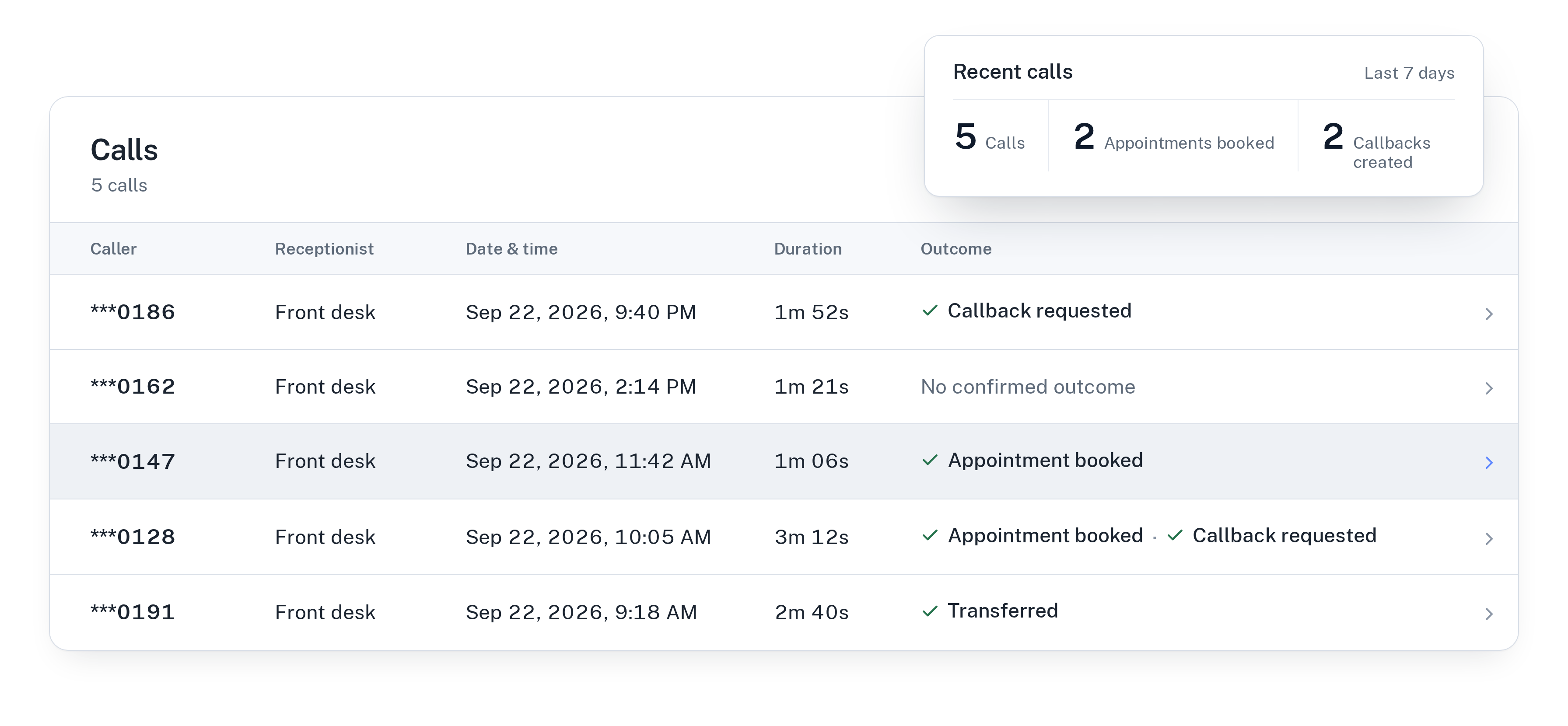
Three ways to handle the calls you can’t take
Every business misses calls. The team is with a customer, on a job site, at lunch or gone for the day. What matters is what happens to the caller next.
There are three common answers: send them to voicemail, pay a human answering service to pick up, or let an AI receptionist answer. Each works well for some calls and badly for others.
Voicemail
Voicemail is free and familiar. For a caller who only wants to leave a short message and is happy to wait, it does the job.
The trouble is everyone else. Many callers hang up instead of leaving a message and try the next business. The ones who do leave a message can’t get an answer, can’t book anything, and have no idea when they’ll hear back. Your team then spends the next morning listening to recordings and calling people back, some of whom have already gone elsewhere.
A human answering service
An answering service puts a real person on the line. That is a big step up from voicemail: callers get a human voice and a promise that someone will follow up.
But the person answering usually works for many businesses at once. They follow a script, take a message and pass it on. They rarely have access to your calendar, your prices or your policies, so most calls still end with “someone will call you back”. Pricing is typically per call or per minute, so costs grow with volume, and coverage for nights, weekends and other languages depends on the service.
An AI receptionist
An AI receptionist answers every call immediately, including several at once, and does more than take a message. It can answer from your approved information, book into your calendar during the call, transfer to your team when your rules say so, and record a callback request with the reason and priority when nobody is available.
It has limits too. It knows only what you teach it and what it is connected to, so setup matters. And it is not a person: calls that need empathy or judgment should be transferred, which is exactly what the rules are for.
Side by side
Compared on the things callers notice and the things your team needs afterwards:
- Answers every call at once: voicemail doesn’t answer at all; an answering service depends on staffing; an AI receptionist does.
- Books appointments during the call: voicemail can’t; an answering service usually can’t; an AI receptionist books into your calendar and confirms only once the booking exists.
- Answers questions about your business: voicemail can’t; an answering service can only read its script; an AI receptionist answers from the facts, pages and documents you approve.
- Nights and weekends: voicemail is always on; an answering service depends on your plan; an AI receptionist answers around the clock.
- Languages: an AI receptionist like WiseUnit can run a receptionist in each language you need; with the other two it depends.
- What you get afterwards: voicemail gives you recordings; an answering service gives you messages; an AI receptionist gives you a transcript and a confirmed outcome for every call.
How to decide
Start from your calls, not from the tools. Look at a normal week and sort the calls you miss into three groups: callers who want to book, callers with a question you could answer from information you already have, and callers who genuinely need a person.
If most missed calls are bookings and routine questions, an AI receptionist handles them end to end. If most need a person, what you need is a fast, reliable handoff: an AI receptionist that transfers urgent calls and records the rest as prioritised callbacks does that too. Voicemail only makes sense when missed calls are rare and nobody minds waiting.
Many teams end up combining them. The AI receptionist answers first, a person takes the calls that need one, and the call history replaces the voicemail inbox.
To see what that looks like in practice, read how to handle after-hours calls.
Frequently asked questions
Is an AI receptionist cheaper than an answering service?
It depends on your volume. WiseUnit plans start at €99 a month with a set number of included minutes and unlimited receptionists, so cost doesn’t rise with every single call the way per-call pricing does. Compare the included minutes with your monthly call time.
Can callers still leave a message?
Yes. When no one is available, WiseUnit records a callback request with the caller’s reason, the time that suits them and a priority, so your team knows who to call first.
What if a caller insists on speaking to a person?
Set a transfer number and describe in the instructions when callers should be put through. If transfers aren’t allowed at that time, the receptionist records a callback request instead.