
Tire season: how your auto shop can handle the call rush
How an auto shop can use an AI receptionist through the seasonal tire rush: what to prepare, how bookings work, which calls still need a person and what to check afterwards.
Why tire season fills up the phone
Most of the year, calls to a shop arrive at a pace your service advisor can keep up with. Then the first cold snap is in the forecast, and half your customers remember their winter tires on the same morning. In spring the same thing happens in reverse.
These weeks are when the bays are fullest and the phone is hardest to answer. The calls are also very similar to each other: when can I come in, how much is it, do you still have my tires, how long will it take. Answering the same four questions forty times a day takes your best people off the cars.
An AI receptionist answers every one of those calls on your shop’s number, handles the repeat questions and bookings itself and leaves the rest as callback requests your team can work through between jobs.
What drivers ask when the weather turns
Here is how the typical tire season calls go with WiseUnit.
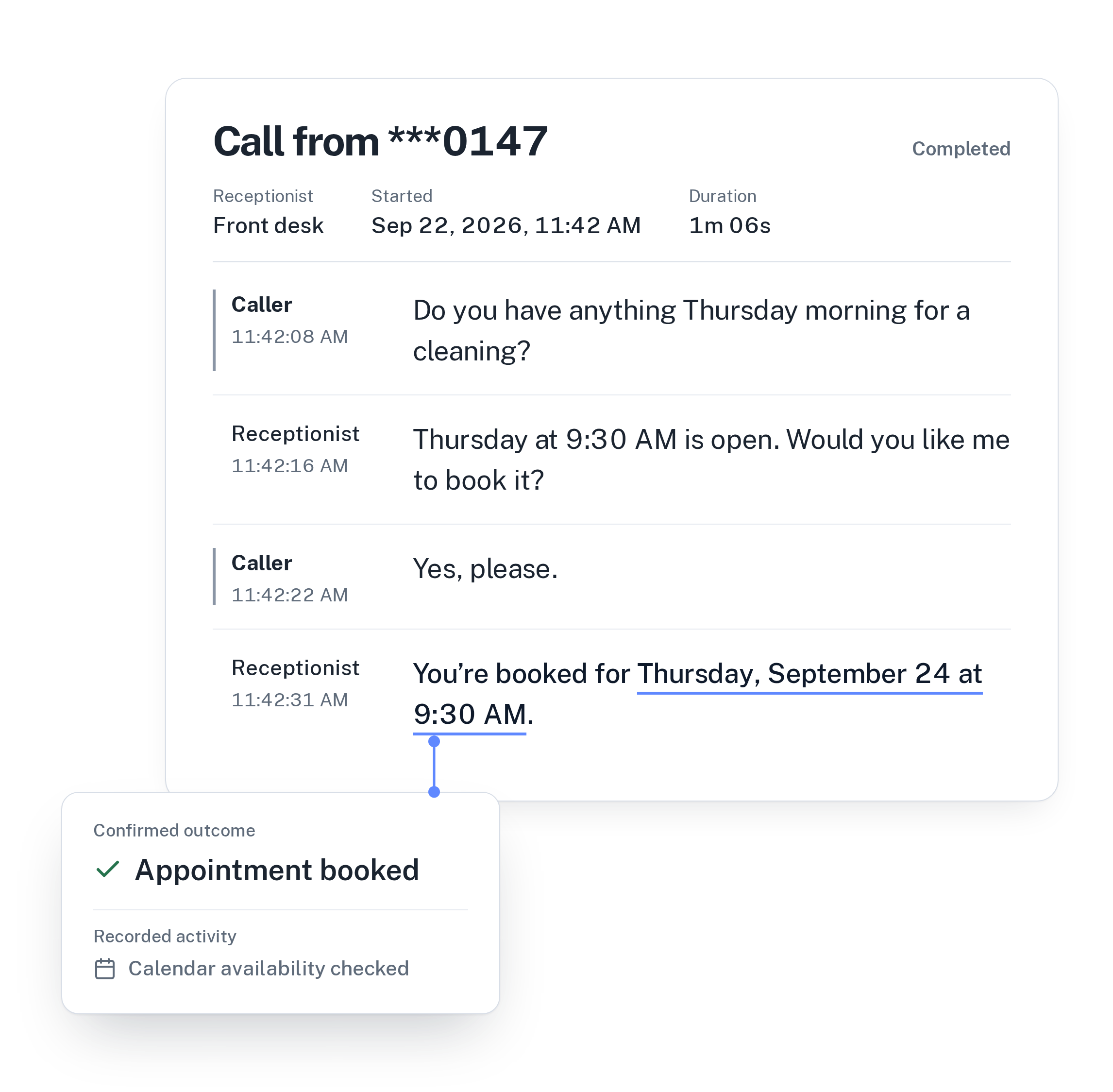
- “Can I get my tires changed this week?” The receptionist checks your calendar during the call, offers an open slot and books it. It tells the caller the slot is booked only once the calendar has it.
- “How much is a tire change?” It answers with the price you approved, for example for a swap of mounted wheels and for mounting and balancing, and says when a quote depends on the car.
- “Do you store tires?” It explains your storage service, what it costs and how pick-up works, using the wording you added.
- “Are my stored tires ready?” or “Which set do you have for me?” It can’t look into your storage records, so it takes the caller’s name, plate and question as a callback request.
- “Do I need to bring anything?” It tells them what you told it: the wheel lock key, the storage ticket, how early to arrive.
- “Can I move my appointment?” It doesn’t move or cancel existing bookings. It records a callback request or puts the caller through to the shop, as you decide.
Prepare before the first cold week
The receptionist answers from the facts, website pages and documents you add and approve. Add the seasonal information a week or two before you expect the rush, while there is still time to listen to a few test calls.
Changes stay in draft until you publish them, so you can prepare the season’s answers in advance and publish them on the day you want callers to hear them. For the basics every shop should add, see how an AI receptionist answers calls for an auto repair shop.
- Tire change prices, split the way you quote them: wheel swap, mounting and balancing, new tires on request.
- Your storage service: price per season, what is included and how customers get their set back.
- How long a change usually takes and whether customers can wait at the shop.
- Whether you take walk-ins during the rush or work by appointment only.
- Extended hours or Saturday openings for the season.
- Whether you sell tires or only fit tires that customers bring.
Keep the calendar honest during the peak
WiseUnit books into Google Calendar, Calendly or Cal.com. Calendly needs a paid Calendly plan, and with Calendly or Cal.com the receptionist asks the caller for an email address, because the booking needs one.
The receptionist offers the slots your calendar shows as open. If you can do eight tire changes on a Saturday morning, the calendar should show eight, not the whole morning. If you block out days for diagnostics or bigger jobs, block them in the calendar too.
Also check how many calls your plan answers at the same moment. Starter answers one call at a time and Business answers three. If your phone rings in bursts during the rush, that number matters more than the included minutes.
Calls that still need a person
Some calls in tire season are urgent or specific to one customer. A flat on the highway, a tire pressure warning that won’t go away or a customer who is already in your lot should reach someone. Each receptionist has one transfer number, and your instructions say which situations are put through. You can allow transfers after hours if someone is on call.
Everything that doesn’t need a person right away becomes a callback request with the reason, the caller’s preferred callback time and a priority. At lunch or at the end of the day, your service advisor works through the list from the top instead of listening to voicemails.
For more on writing callback rules that work, read callback requests: getting messages you can act on.
After the rush
Every call is saved in your call history with a transcript and a confirmed outcome, such as “Appointment booked” or “Callback requested”. Call analytics show how the weeks went, and the list of unanswered questions shows what drivers asked that your knowledge didn’t cover. Approve an answer once and it is used on every call after that, which makes the spring change easier than the autumn one.
When the season is over, take out the seasonal notes, such as extended hours, and publish again so callers hear your normal schedule.
Getting started
Connect a phone number, add your hours, services, tire prices and storage details, connect your calendar, set the transfer number and publish. Then call your own shop and ask for a tire change on Saturday.
WiseUnit plans start at €119 a month excluding VAT, or €99 a month on annual billing, with 1,000 included minutes on Starter. Business costs €359 a month, or €299 on annual billing, with 3,500 minutes and three calls at once. Every plan includes unlimited receptionists.
See how it works for garages and dealerships on the automotive page, or compare plans on the pricing page.
Frequently asked questions
Can the AI receptionist tell a customer whether their stored tires are ready?
No. WiseUnit does not look up storage records or jobs in your shop software. The receptionist takes the caller’s name, plate and question as a callback request, or transfers the call if you set it up that way.
Can it reschedule tire appointments?
No. It books new appointments into Google Calendar, Calendly or Cal.com and confirms them only once they exist. Requests to move or cancel a booking become a callback request or a transfer.
What if several drivers call at the same time?
It depends on your plan. Starter answers one call at a time, Business answers three at once, and Scale is set up to suit your volume.
How much does it cost?
Plans start at €119 a month excluding VAT, or €99 a month on annual billing, with 1,000 included minutes on Starter and unlimited receptionists on every plan.