
Vendor Dispatch Automation for Property Managers in 2026
A practical guide to vendor dispatch automation for property managers who want faster scheduling, better compliance, and less manual follow-up.

Quick Answer: What Is Vendor Dispatch Automation?
Vendor dispatch automation is the use of software and AI workflow logic to automatically select, brief, schedule, track, and follow up with maintenance vendors across a property portfolio.
Instead of relying on coordinators to do every call, email, and status check manually, the system moves work forward by using live data, predefined rules, and escalation paths.
For property managers, the goal is straightforward: faster response times, better completion rates, lower coordination overhead, and fewer missed handoffs between request intake and work completion.
For the broader operating model, read our Property Management Software vs AI Execution guide.
What Are the Core Components of Vendor Dispatch Automation?
Vendor dispatch automation is not one feature. It is an operating workflow that connects maintenance data, vendor capability data, scheduling logic, and financial controls into one coordinated system.
When the pieces fit together, the system can move from request to resolution with far less manual intervention.
- Asset-based dispatch triggers that create or prioritize work when conditions meet a threshold.
- Priority-ranked work queues that sort urgent jobs before vendors are contacted.
- Vendor roster management that tracks trade specialization, territory, capacity, and compliance.
- Scoped digital work orders that brief vendors with the details they need up front.
- Real-time tracking and SLA monitoring that update status as milestones are reached.
- Automated invoice matching that compares invoices against approved scope and rate ceilings.
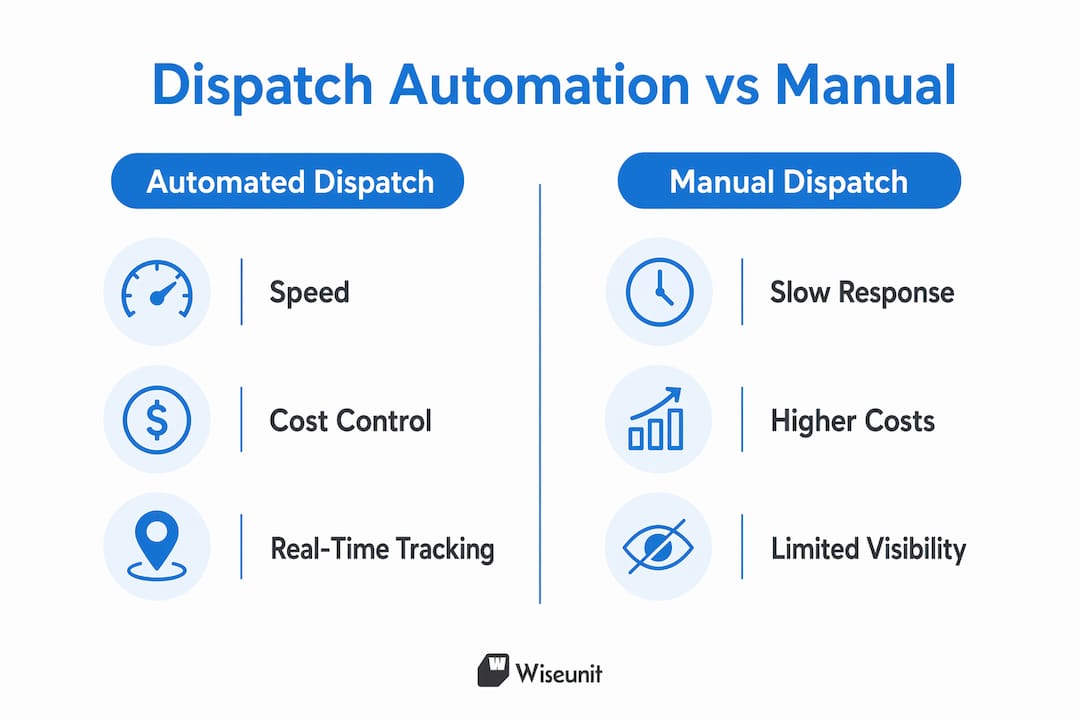
How Does Vendor Dispatch Automation Compare to Manual Dispatch?
Manual dispatch is mostly a data complexity problem, not just a labor problem. As the portfolio grows, a coordinator has to track vendor availability, license expiration, SLA countdowns, and open invoice disputes at the same time.
The result is predictable: phone-tag with vendors, stale spreadsheet records, missed deadlines, and more time spent reconstructing what happened than actually moving work forward.
Automation changes the shape of the work. Instead of asking people to remember every step, it lets the workflow enforce the next step automatically.

For a vendor-side deep dive, see our Vendor Management in Property Management guide.
- Manual dispatch depends on the coordinator remembering the next action.
- Automated dispatch uses live data to route work and trigger follow-up.
- Manual dispatch updates happen after someone notices a problem.
- Automated dispatch can notify, escalate, or reassign before the problem grows.
- Manual dispatch struggles as volume scales.
- Automated dispatch gets more valuable as the number of requests increases.
What Challenges Should Teams Address When Implementing Automated Dispatch?
The most common implementation mistake is trying to automate the entire dispatch lifecycle at once. The better approach is phased automation: start with the routine work, then expand into the more exception-heavy parts of the process.
Automation works best when the source data is clean and the escalation rules are explicit.
For rollout sequencing, read our Property Management Maintenance Workflow guide.
- Audit and clean vendor and asset data before go-live.
- Start with high-volume, low-complexity work orders first.
- Configure compliance alerts for insurance and license expiration.
- Define SLA thresholds and escalation rules before launch.
- Keep humans in the loop for exceptions and sensitive decisions.
- Train coordinators to monitor exceptions, not manually manage every ticket.
How Does AI-Driven Automation Transform Vendor Management at Scale?
AI adds real-time optimization that rule-based systems cannot match. Where standard automation follows fixed logic, AI can keep adjusting as new data arrives from requests, vendors, schedules, and completions.
That matters most in portfolios where multiple jobs overlap and the cost of delayed coordination compounds quickly.
If you want a broader market view, see our Best AI Tools for Property Management guide.
- Skill-to-asset matching improves the odds of sending the right vendor the first time.
- Real-time schedule re-optimization reduces idle travel and avoids stale schedules.
- Emergency job insertion lets urgent work move ahead without breaking the whole queue.
- Vendor performance tracking surfaces who actually performs well over time.
- Automated tenant communication reduces inbound calls and status-check noise.
Key Takeaways
Vendor dispatch automation delivers measurable gains when it is built on clean data, phased rollout, and a human-in-the-loop model for exceptions.
The biggest mistake is treating dispatch as a notification problem. It is really an execution problem.
- Start with clean data.
- Phase your rollout.
- Monitor compliance continuously.
- Use AI to re-optimize, not just route tickets.
- Automate invoice matching to reduce disputes and admin work.
Why I Think Most Teams Underestimate the Data Problem
After working closely with property management teams across multifamily and single-family portfolios, the pattern is usually the same: teams invest in dispatch software and then wonder why the results are underwhelming.
The problem is usually not the software itself. It is the vendor data going into the system.
Automation does not fix bad data. It amplifies it. If a system dispatches jobs against stale records, it will route work to vendors who have moved, lost coverage, or no longer service the trade.
The teams that get the most value treat data quality as an ongoing operational discipline, not a one-time setup task.
For related context, read our Property Management Maintenance Operations guide.
- Review vendor records monthly.
- Flag compliance gaps proactively.
- Update asset history after completed jobs.
- Keep coordinators focused on exceptions and relationships.
How WiseUnit Simplifies Vendor Dispatch for Property Teams
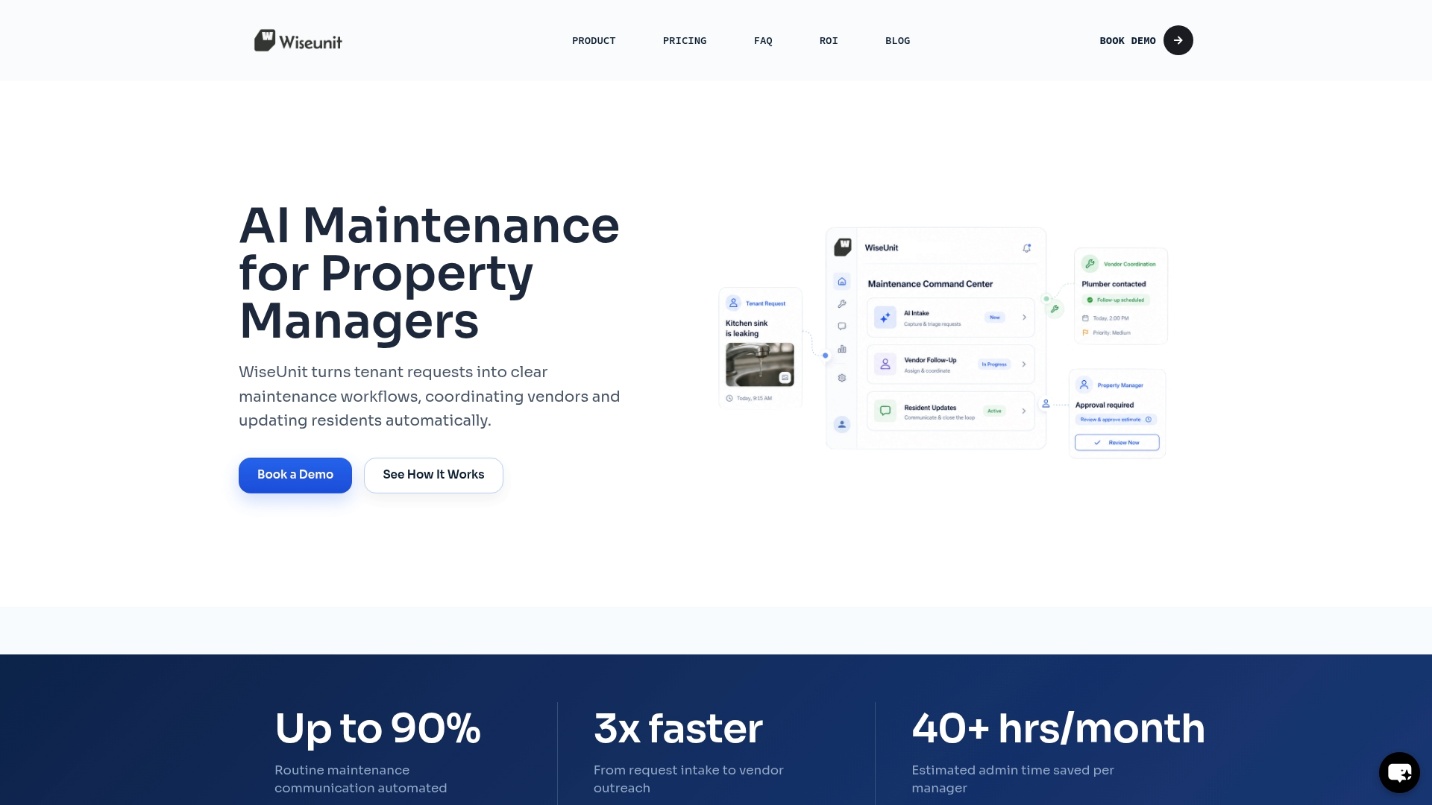
WiseUnit is built as a maintenance execution layer for property management companies managing multifamily, single-family, and HOA portfolios.
Rather than just tracking tickets, WiseUnit helps execute the full workflow: intake, issue triage, vendor matching, scheduling, real-time SLA monitoring, and status updates synced back into your systems.
That means property managers get a centralized operational view without adding headcount for every increase in maintenance volume.
If you want to estimate the business impact, try our ROI calculator.
To see the workflow in practice, book a demo.
- Tenant intake via call, SMS, or online form
- Issue triage and urgency classification
- Vendor matching and scheduling
- Real-time SLA monitoring
- Compliance checks for insurance and licensing
- Status updates pushed into the PMS
Frequently Asked Questions
The questions below cover the most common implementation and ROI concerns property managers raise when they evaluate vendor dispatch automation.
Frequently asked questions
What is vendor dispatch automation in property management?
Vendor dispatch automation is software that helps property managers automatically select, schedule, brief, and track maintenance vendors based on asset data, vendor capabilities, and real-time availability.
How much can automated dispatch reduce vendor costs?
Results vary, but property teams often see lower vendor spend when dispatch rules reduce invoice disputes, improve SLA performance, and eliminate redundant coordination work.
What data do I need before implementing dispatch automation?
You need current vendor contact details, trade classifications, service territories, insurance and license records, and asset histories. Outdated data will degrade outcomes quickly.
Should I automate the entire vendor dispatch process at once?
No. The best practice is to automate routine tasks first, then expand into more complex and exception-heavy scenarios once the core workflow is stable.
How does AI dispatch differ from standard automated dispatch?
Standard automation follows fixed rules. AI dispatch can continuously re-optimize schedules using live data and match vendors to jobs based on skill, asset type, and performance history.